
Overwriting an instinct: Visual cortex instructs learning to suppress fear responses.
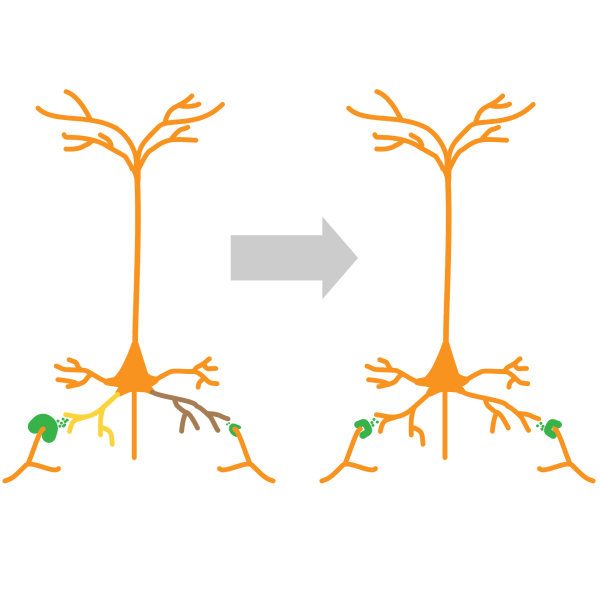
Fast instinctive responses to environmental stimuli can be crucial for survival but are not always optimal. Animals can adapt their behavior and suppress instinctive reactions, but the neural pathways mediating such ethologically relevant forms of learning remain unclear. We found that posterolateral higher visual areas (plHVAs) are crucial for learning to suppress escapes from innate visual threats through a top-down pathway to the ventrolateral geniculate nucleus (vLGN). plHVAs are no longer necessary after learning; instead, the learned behavior relies on plasticity within vLGN populations that exert inhibitory control over escape responses. vLGN neurons receiving input from plHVAs enhance their responses to visual threat stimuli during learning through endocannabinoid-mediated long-term suppression of their inhibitory inputs. We thus reveal the detailed circuit, cellular, and synaptic mechanisms underlying experience-dependent suppression of fear responses.
2025. Science, 387(6734):682-688.
2025. Imaging Neurosci (Camb), 3.
2024. Hum Brain Mapp, 45(2)e26602.