A brief introduction
The Unit hosts PhD students for research projects aligned to empirical neuroscience, computational neuroscience, biomedical engineering, and experimental medicine with a focus on neurological and psychiatric brain conditions. We aim to empower future generations of researchers, technologists and clinicians to draw on their learning and experience of transdisciplinary research to tackle important unmet challenges in discovery and translational neuroscience. We offer exceptional opportunities for students wishing to pursue neuroscience research across species at multiple scales and within an in vivo context.
PhD students at the Unit can choose from a diverse and complementary set of research projects that leverage a broad array of concepts and approaches. Our students benefit from the guidance of at least two supervisors and feedback from the Unit’s outstanding research community. Students have ample opportunity to further their knowledge, skills and career development through events and initiatives organised by the Unit and our host department, the Nuffield Department of Clinical Neurosciences. Students are also encouraged to make the most of the wider intellectual environment at the University of Oxford. We welcome students from around the world.
Techniques & Approaches
The Unit’s collective goal is to understand and exploit the moment-to-moment interactions of networks of neurons that are critical for brain function and behaviour. Our PhD students make important contributions towards achieving this goal and typically use a focused set of multidisciplinary research techniques. However, we provide structured opportunities for knowledge transfer and exchange so that students can become familiar with the full range of research approaches taken within the Unit. These include:
- Behavioural testing and quantification.
- Advanced signals analysis, including statistical analytical techniques, mathematical modelling, and machine learning.
- Brain stimulation using devices delivering sensory, optical, electrical, magnetic or acoustic stimuli.
- Electrophysiological and optical monitoring of specific cell types and neurotransmitter systems in the brain.
- Molecular and structural definitions of neuronal networks.
- Computational modelling.
- Neurotechnology development (hardware, software, control algorithms).
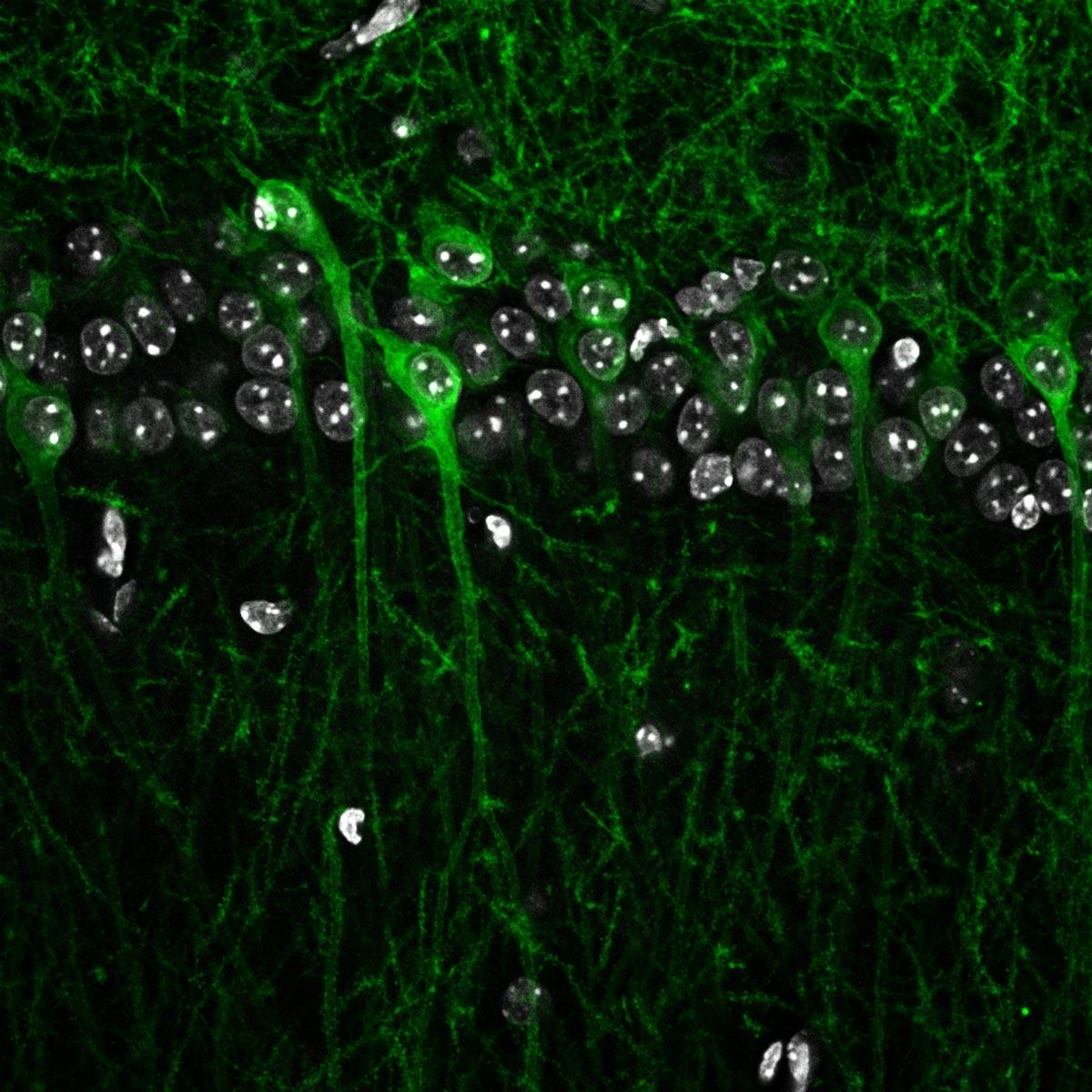
ArchT-GFP–expressing neurons in the pyramidal cell layer of mouse hippocampus. From: Recoding a cocaine-place memory engram to a neutral engram in the hippocampus. Trouche S. et al. Nat Neurosci. 2016 Apr;19(4):564-7.
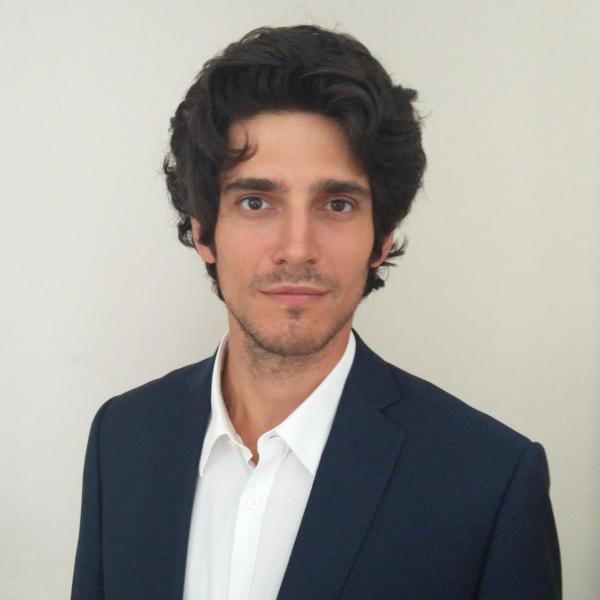
The Unit has provided three key ingredients to kickstart my scientific career: a constant source of inspiration, the freedom to explore my ideas, and frequent opportunities for feedback.”
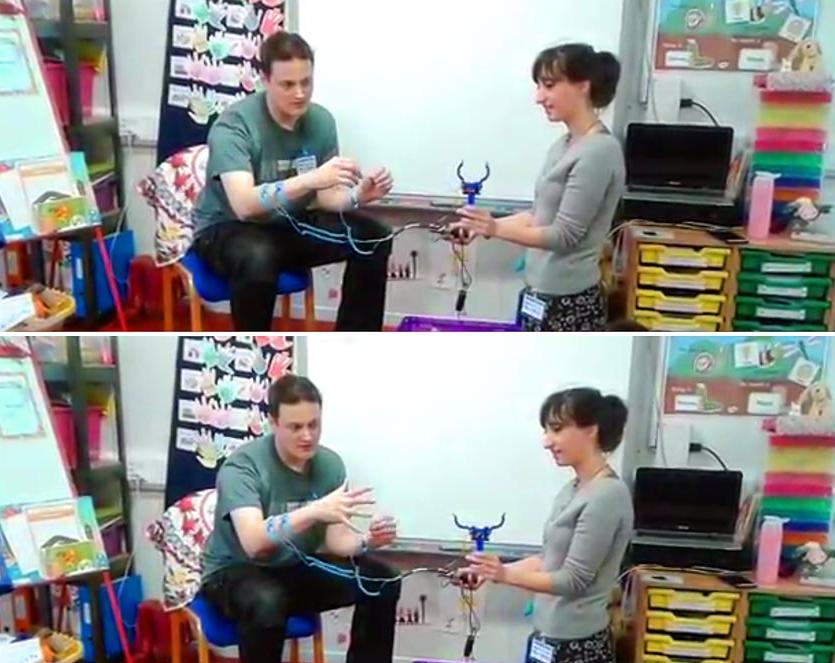
Ben and Flavie demonstrate how electricity in the muscles of the arm can be detected and used to control a robot claw, during a presentation to primary school children.
Training & Career Development
The Unit fosters a training and career development environment that is inclusive, accessible, and equitable, where individuals with diverse backgrounds can flourish. We support our PhD students to skill-up and pursue their chosen career paths during and after their time at the Unit. Training includes work-based learning ‘on-the-job’, formal training courses, and a wide variety of professional activities that can be individually tailored. We provide each Unit student with opportunities to develop a personalised training and development programme that meets their needs and prepares them for their next career steps, whether they foresee those being in academia, industry, clinical practice or elsewhere.
Our PhD students benefit from the broad range of training and career development opportunities offered by the Unit as well as those made available by the Nuffield Department of Clinical Neurosciences, the wider university, and the student’s own college. The Unit organises research seminars and “ToolBox Talks” on a regular basis, together with an annual Research Day that brings the whole Unit community together to share new and exciting research in a collegiate atmosphere. The Unit also offers bespoke training in areas such as Open Research, patient and public involvement/engagement in research, responsible research and innovation, environmentally sustainable research, and the translation and commercialisation of research.
Previous students who completed their PhD in the Unit have gone on to successful careers in a wide range of job roles. The challenging yet rewarding research in the Unit is a great start to your career and I would definitely recommend working here!”
Projects
Project
Developing and testing brain stimulation patterns to promote half-harmonic entrainment for therapeutic benefit in Parkinson’s disease
Deep brain stimulation can markedly improve movement in people with Parkinson’s disease, yet we still do not fully understand how it works. Recent studies suggest that it may be particularly effective when gamma-frequency brain activity becomes synchronised to stimulation at half the stimulation frequency, a phenomenon known as half-harmonic entrainment. Understanding and improving deep brain stimulation therefore likely requires the ability to selectively control this synchronisation.
The overall goal of this PhD studentship is to develop new patterns of brain stimulation that promote gamma activity through half-harmonic entrainment, and to investigate whether doing so can improve movement in Parkinson’s disease. To achieve this, the project will combine mathematical modelling, experiments in healthy participants using non-invasive brain stimulation and electroencephalography, and a proof-of-concept study in people with Parkinson’s disease.
The project will take place in the Brain Network Dynamics Unit of the Nuffield Department of Clinical Neurosciences and in the Medical Research Council Centre of Research Excellence in Restorative Neural Dynamics (MRC CoRE RND). Students will benefit from the extensive interdisciplinary skills training and personalised career development opportunities available within the Unit and the MRC CoRE RND. Students will receive specialised training in their areas of project research (see below) as well as, for example, in the translation and commercialisation of research, best practice in Open Science, and how to effectively involve and engage patients and the public with research.
Spanning computational, experimental and clinical neuroscience, the studentship will provide advanced training in mathematical modelling of brain dynamics, the design and optimisation of brain stimulation, human electrophysiology and rigorous data analysis. You will gain hands-on experience with EEG and non-invasive brain stimulation in healthy participants. You will also have the opportunity to work with brain activity recordings and behavioural measurements from people with Parkinson’s disease undergoing deep brain stimulation. The project will additionally provide training in translating theoretical predictions into experiments in healthy participants and people with Parkinson’s disease.
This four-year Ph.D. (D.Phil.) studentship offers three years of full-time tuition fees at the Home rate, and four years of non-taxable stipend at the full-time UKRI rate (including any uplifts announced). Both Home students and International students are eligible to receive this funding package. Please see further details about MRC/UKRI studentships and UKRI guidance regarding Home and International eligibility. Successful offer-holders who have applied by the December deadline may also be considered for other University of Oxford scholarships.
Applications are invited from candidates who possess, or expect to receive a 1st class or upper 2nd class degree (or equivalent) in a related quantitative discipline, e.g. mathematics, physics, computer science, engineering. We also encourage applications from candidates with a degree in biological sciences or medicine who have experience with computational methods.
Previous experience in neuroscience research is highly desirable.
Candidates must contact the lead project supervisor before submitting an application. To find out more about this studentship, the research project, and the application process, please contact Dr Benoit Duchet by email on benoit.duchet@ndcn.ox.ac.uk.
To be considered for this studentship, please submit an application for admission to the D.Phil. in Clinical Neurosciences at the Nuffield Department of Clinical Neurosciences (course code RD_CU1), following the guidance for applications to this course. On the application form, in the section headed ‘Departmental Studentship Applications’, please indicate that you are applying for a studentship and enter the reference code “27NDCN01MRC” into the funding tab.
The closing date for applications is 12.00 midday UK time on Tuesday 1st December 2026.
Supervisors

Applications are invited from both Home students and International students to join a multidisciplinary team of researchers studying the synchronisation of brain activity to deep brain stimulation in Parkinson’s disease. This studentship is available from the start of academic year 2027/28, is for 4 years, and will be co-supervised by Dr Benoit Duchet and Professor Huiling Tan at the MRC Centre of Research Excellence in Restorative Neural Dynamics.
Project
Phase-locked Deep Brain Stimulation to restore neural dynamics in Parkinson’s disease
In Parkinson’s disease (PD), abnormal brain rhythms—such as elevated beta waves and disrupted slow-wave sleep—contribute to movement and sleep problems. Phase-locked deep brain stimulation (DBS) can help correct these patterns by timing stimulation to specific phases of brain activity. Leveraging recent advances in real-time phase estimation and artefact removal, this project explores how phase-specific DBS may improve motor function and sleep in PD, moving toward personalised brain therapies.
This PhD project aims to explore how precisely timed, phase-locked deep brain stimulation (DBS) can improve movement and sleep symptoms in people with Parkinson’s (PwP) by modulating abnormal brain rhythms. It combines real-time brain signal processing with closed-loop stimulation to target beta activity during wakefulness and slow-wave activity during sleep. Students will work with PwP who have already received DBS, develop stimulation protocols using a computer-in-the-loop system, and help build software interfaces for implantable devices. Through collaboration with clinical and engineering teams, the project seeks to uncover how brain rhythms relate to behaviour and advance personalised neuromodulation therapies.
The project will take place in the Brain Network Dynamics Unit of the Nuffield Department of Clinical Neurosciences and in the Medical Research Council Centre of Research Excellence in Restorative Neural Dynamics (MRC CoRE RND). Students will benefit from the extensive interdisciplinary skills training and personalised career development opportunities available within the Unit and the MRC CoRE RND. Students will receive specialised training in their areas of project research (see below) as well as, for example, in the translation and commercialisation of research, best practice in Open Science, and how to effectively involve and engage patients and the public with research.
Students will receive advanced training in human neurophysiology, including recording and real-time processing of intracranial and scalp brain signals. They will gain hands-on experience with closed-loop brain stimulation systems and work directly with people with Parkinson’s, learning clinical research methods, behavioural testing, and sleep analysis. The project also builds skills in time-series analysis, machine learning, and software development for neurotechnology, including designing software interfaces for implantable devices. Collaboration across the MRC CoRE RND will support training in translational neuroscience and adaptive stimulation strategies.
This four-year Ph.D. (D.Phil.) studentship offers three years of full-time tuition fees at the Home rate, and four years of non-taxable stipend at the full-time UKRI rate (including any uplifts announced). Both Home students and International students are eligible to receive this funding package. Please see further details about MRC/UKRI studentships and UKRI guidance regarding Home and International eligibility. Successful offer-holders who have applied by the December deadline may also be considered for other University of Oxford scholarships.
Interested candidates should possess, or expect to receive, a 1st class or upper 2nd class degree (or equivalent) in a related scientific discipline, e.g. physical sciences, medicine, computer science, engineering, or mathematics. Previous experience in neuroscience research is highly desirable.
Candidates must contact the lead project supervisor before submitting an application. To find out more about this studentship, the research project, and the application process, please contact Prof Huiling Tan by email on huiling.tan@ndcn.ox.ac.uk.
To be considered for this studentship, please submit an application for admission to the D.Phil. in Clinical Neurosciences at the Nuffield Department of Clinical Neurosciences (course code RD_CU1), following the guidance for applications to this course. On the application form, in the section headed ‘Departmental Studentship Applications’, please indicate that you are applying for a studentship and enter the reference code “27NDCN01MRC” into the funding tab.
The closing date for applications is 12.00 midday UK time on Tuesday 1st December 2026.
Supervisors
Applications are invited from both Home students and International students to join a multidisciplinary team of researchers studying phase-locked deep brain stimulation to improve movement and sleep in people with Parkinson’s disease. This studentship is available from the start of academic year 2027/28, is for 4 years, and will be co-supervised by Professor Huiling Tan, Dr Shenghong He, and Professor Andrew Sharott at the MRC Centre of Research Excellence in Restorative Neural Dynamics.
Project
Understanding neural circuit dynamics in models of Parkinson’s
The complex coordinated activity of large populations of neurons in the brain can be distilled down to low-dimensional ‘latent dynamics’. These latent dynamics provide insight into network-level computations in the brain that support motor and cognitive functions. Understanding how latent dynamics emerge in the brain in health and how they are affected in Parkinson’s is important for developing new and improved treatments for this condition.
The overall goal of this PhD studentship project is to generate new mechanistic insights into how latent dynamics in the basal ganglia and their partner brain circuits encode and shape purposeful movement in health as well as impaired movement in Parkinson’s. To achieve this, the project will couple experimental interventions with advanced data analyses to capture and interrogate neural circuit dynamics in the living brain at high spatiotemporal resolution. The project will focus on the use of mouse models with intact or comprised midbrain dopamine systems, the readouts from which straddle multiple levels of neural function.
The project will take place in the Brain Network Dynamics Unit of the Nuffield Department of Clinical Neurosciences and in the Medical Research Council Centre of Research Excellence in Restorative Neural Dynamics (MRC CoRE RND). Students will benefit from the extensive interdisciplinary skills training and personalised career development opportunities available within the Unit and the MRC CoRE RND. Students will receive specialised training in their areas of project research (see below) as well as, for example, in the translation and commercialisation of research, best practice in Open Science, and how to effectively involve and engage patients and the public with research.
Focusing on basal ganglia circuits, studentship holders will use cutting-edge research approaches for monitoring and manipulating neurons in the living brain. As an integral part of this project, you will receive advanced training in the following research techniques; electrophysiology, fibre photometry, neuroanatomy, and mouse behavioural assays, together with advanced data analysis. You will also be trained to use and characterise mouse models that have phenotypes of relevance to human Parkinson’s.
This four-year Ph.D. (D.Phil.) studentship offers three years of full-time tuition fees at the Home rate, and four years of non-taxable stipend at the full-time UKRI rate (including any uplifts announced). Both Home students and International students are eligible to receive this funding package. Please see further details about MRC/UKRI studentships and UKRI guidance regarding Home and International eligibility. Successful offer-holders who have applied by the December deadline may also be considered for other University of Oxford scholarships.
Interested candidates should hold, or expect to receive, a 1st class or upper 2nd class degree (or equivalent) in a related scientific discipline, e.g. biological or physical sciences, medicine, mathematics. Previous experience in neuroscience research is highly desirable.
Candidates must contact the lead project supervisor before submitting an application. To find out more about this studentship, the research project, and the application process, please contact Professor Peter Magill by email on peter.magill@ndcn.ox.ac.uk.
To be considered for this studentship, please submit an application for admission to the D.Phil. in Clinical Neurosciences at the Nuffield Department of Clinical Neurosciences (course code RD_CU1), following the guidance for applications to this course. On the application form, in the section headed ‘Departmental Studentship Applications’, please indicate that you are applying for a studentship and enter the reference code “27NDCN01MRC” into the funding tab.
The closing date for applications is 12.00 midday UK time on Tuesday 1st December 2026.
Supervisors
Applications are invited from both Home students and International students to join a multidisciplinary team of researchers studying the links between behaviour and brain circuit dynamics in animal models of Parkinson’s. This studentship is available from the start of academic year 2027/28, is for 4 years, and will be co-supervised by Professor Peter Magill, Professor Andrew Sharott, Dr Juan Gallego and Dr Helen Collins at the Medical Research Council Centre of Research Excellence in Restorative Neural Dynamics.
Project
Developing closed-loop sleep stimulation for motor learning and stroke recovery
There is growing evidence that sleep and sleep-related oscillations are disturbed following stroke, and poor sleep is associated with worse motor rehabilitation outcomes. Closed loop auditory stimulation (CLAS) is a promising technique to boost sleep-related oscillations and the associated functions (e.g. boosting motor memory through modulation of slow oscillations and sleep spindles). However, to maximise its benefits, this neurotechnology must work in the home, where most stroke rehabilitation takes place.
The overall goal of this PhD studentship is to develop and test a novel, home-based system for precise closed-loop auditory stimulation during sleep, and assess the feasibility of use for stroke survivors.
To achieve this, we will test the capability of our novel device to automatically track sleep in real time and test the effects on sleep-related oscillations and motor learning in stroke survivors. Alongside this, we will work together with stroke survivors, and other relevant stakeholders, to refine the design of the home-based system before testing the potential to deliver multi-night stimulation in a home setting.
The project will take place in the Brain Network Dynamics Unit and Oxford Centre for Integrative Neuroscience (within the Nuffield Department of Clinical Neurosciences) and in the Medical Research Council Centre of Research Excellence in Restorative Neural Dynamics (MRC CoRE RND). Students will benefit from the extensive interdisciplinary skills training and personalised career development opportunities available within the Unit and the MRC CoRE RND. Students will receive specialised training in their areas of project research (see below) as well as, for example, in the translation and commercialisation of research, best practice in Open Science, and how to effectively involve and engage patients and the public with research.
Studentship holders will harness cutting-edge methods for real-time monitoring of sleep EEG and closed-loop stimulation in a clinical population (stroke). As an integral part of these projects, you will receive advanced training in a variety of research techniques including polysomnography, behavioural/motor learning data collection, sleep scoring, advanced analysis of sleep microarchitecture, and co-design.
This four-year Ph.D. (D.Phil.) studentship offers three years of full-time tuition fees at the Home rate, and four years of non-taxable stipend at the full-time UKRI rate (including any uplifts announced). Both Home students and International students are eligible to receive this funding package. Please see further details about MRC/UKRI studentships and UKRI guidance regarding Home and International eligibility. Successful offer-holders who have applied by the December deadline may also be considered for other University of Oxford scholarships.
Interested candidates should possess, or expect to receive, a 1st class or upper 2nd class degree (or equivalent) in a related scientific discipline, e.g. biomedical sciences, neuroscience, psychology, medicine, bioengineering. Previous experience in human neuroscience research with clinical populations is highly desirable.
Candidates must contact the lead project supervisor before submitting an application. To find out more about this studentship, the research project, and the application process, please contact Associate Professor Melanie Fleming by email on melanie.fleming@ndcn.ox.ac.uk.
To be considered for this studentship, please submit an application for admission to the D.Phil. in Clinical Neurosciences at the Nuffield Department of Clinical Neurosciences (course code RD_CU1), following the guidance for applications to this course. On the application form, in the section headed ‘Departmental Studentship Applications’, please indicate that you are applying for a studentship and enter the reference code “27NDCN01MRC” into the funding tab.
The closing date for applications is 12.00 midday UK time on Tuesday 1st December 2026.
Supervisors
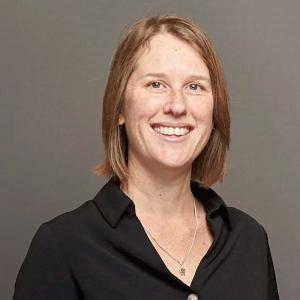
Applications are invited from both Home students and International students to join a multidisciplinary team of researchers studying the potential for closed-loop auditory stimulation during sleep to be used to improve memory consolidation following stroke. This studentship is available from the start of academic year 2027/28, is for 4 years, and will be co-supervised by Dr Melanie Fleming, Professor Andrew Sharott, and Professor Andrew Jackson at the MRC Centre of Research Excellence in Restorative Neural Dynamics.
Project
Discovering and translating physiological biomarkers for personalised adaptive Deep Brain Stimulation in Parkinson’s disease
Deep Brain Stimulation (DBS) is an established therapy for Parkinson’s disease (PD), but its benefits vary across symptoms and between individuals. New generations of DBS devices can record brain activity as well as deliver stimulation, providing an opportunity to understand how neural dynamics relate to symptoms and treatment response. Identifying robust neural and behavioural biomarkers could enable stimulation to be adapted to an individual’s changing clinical state and improve treatment of both motor and non-motor symptoms.
The overall goal of this PhD studentship is to determine how neural and behavioural signals can be used to guide more personalised adaptive Deep Brain Stimulation for Parkinson’s disease. The project will combine brain recordings with measures of movement and behaviour across rest, movement, and sleep in people implanted with sensing-enabled DBS devices. Advanced analytical approaches will be used to identify biomarkers of clinically relevant states and to investigate how these biomarkers can inform new stimulation strategies. In doing so, the project aims to generate new mechanistic understanding of Parkinson’s disease while helping develop more responsive and personalised neurostimulation therapies.
The project will take place in the Brain Network Dynamics Unit of the Nuffield Department of Clinical Neurosciences and in the Medical Research Council Centre of Research Excellence in Restorative Neural Dynamics (MRC CoRE RND). Students will benefit from the extensive interdisciplinary skills training and personalised career development opportunities available within the Unit and the MRC CoRE RND. Students will receive specialised training in their areas of project research (see below) as well as, for example, in the translation and commercialisation of research, best practice in Open Science, and how to effectively involve and engage patients and the public with research.
Focusing on translational human neurotechnology, this studentship offers the opportunity to work with cutting-edge techniques including wireless neural activity streaming from implanted DBS devices, high density EEG, EMG, and wearable sensor recordings. You will develop advanced skills in signal processing, multimodal data integration, machine learning, patient-facing research, and the design and testing of adaptive stimulation paradigms. The project offers close collaboration with the functional neurosurgery service at Oxford University Hospitals, North Bristol NHS Trust, industrial partners Amber Therapeutics, and people affected by Parkinson’s. There will also be opportunities to collaborate through the Parkinson’s UK Deep Brain Stimulation Network and contribute to shared translational datasets.
This four-year Ph.D. (D.Phil.) studentship offers three years of full-time tuition fees at the Home rate, and four years of non-taxable stipend at the full-time UKRI rate (including any uplifts announced). Both Home students and International students are eligible to receive this funding package. Please see further details about MRC/UKRI studentships and UKRI guidance regarding Home and International eligibility. Successful offer-holders who have applied by the December deadline may also be considered for other University of Oxford scholarships.
Interested candidates should possess, or expect to receive, a 1st class or upper 2nd class degree (or equivalent) in a related scientific discipline, e.g. biological or physical sciences, medicine, computer science, engineering, mathematics. Applicants from experimental, clinical, engineering and computational backgrounds are encouraged.
Relevant experience in one or more of the following areas is desirable:
- Research experience in neuroscience, neurophysiology or a related field
- Signal processing or analysis of neural, physiological, movement or other biological data
- Programming for data analysis, for example in Python, MATLAB or R
Experience of human or patient-facing data collection, wearable or movement-sensor analysis, machine learning, or brain stimulation would be advantageous but is not essential.
Candidates must contact the lead project supervisor before submitting an application. To find out more about this studentship, the research project, and the application process, please contact Dr Ashwini Oswal by email on ashwini.oswal@ndcn.ox.ac.uk.
To be considered for this studentship, please submit an application for admission to the D.Phil. in Clinical Neurosciences at the Nuffield Department of Clinical Neurosciences (course code RD_CU1), following the guidance for applications to this course. On the application form, in the section headed ‘Departmental Studentship Applications’, please indicate that you are applying for a studentship and enter the reference code “27NDCN01MRC” into the funding tab.
The closing date for applications is 12.00 midday UK time on Tuesday 1st December 2026.
Supervisors
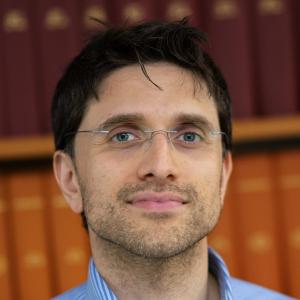
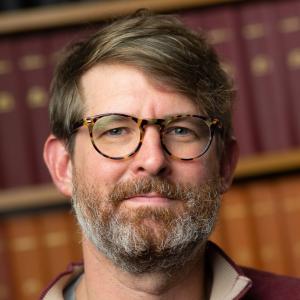
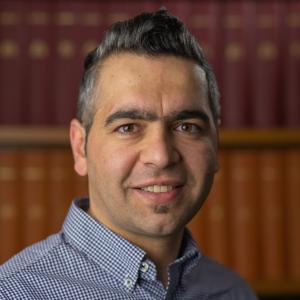
Applications are invited from both Home students and International students to join a multidisciplinary team of researchers studying how neural, movement and behavioural signals can be used to personalise adaptive deep brain stimulation (DBS) for Parkinson’s disease. This studentship is available from the start of academic year 2027/28, is for 4 years, and will be co-supervised by Dr. Ashwini Oswal, Professor Tim Denison, Dr. Hayriye Cagnan, and Dr. Bahman Abdi-Sargezeh at the MRC Centre of Research Excellence in Restorative Neural Dynamics.

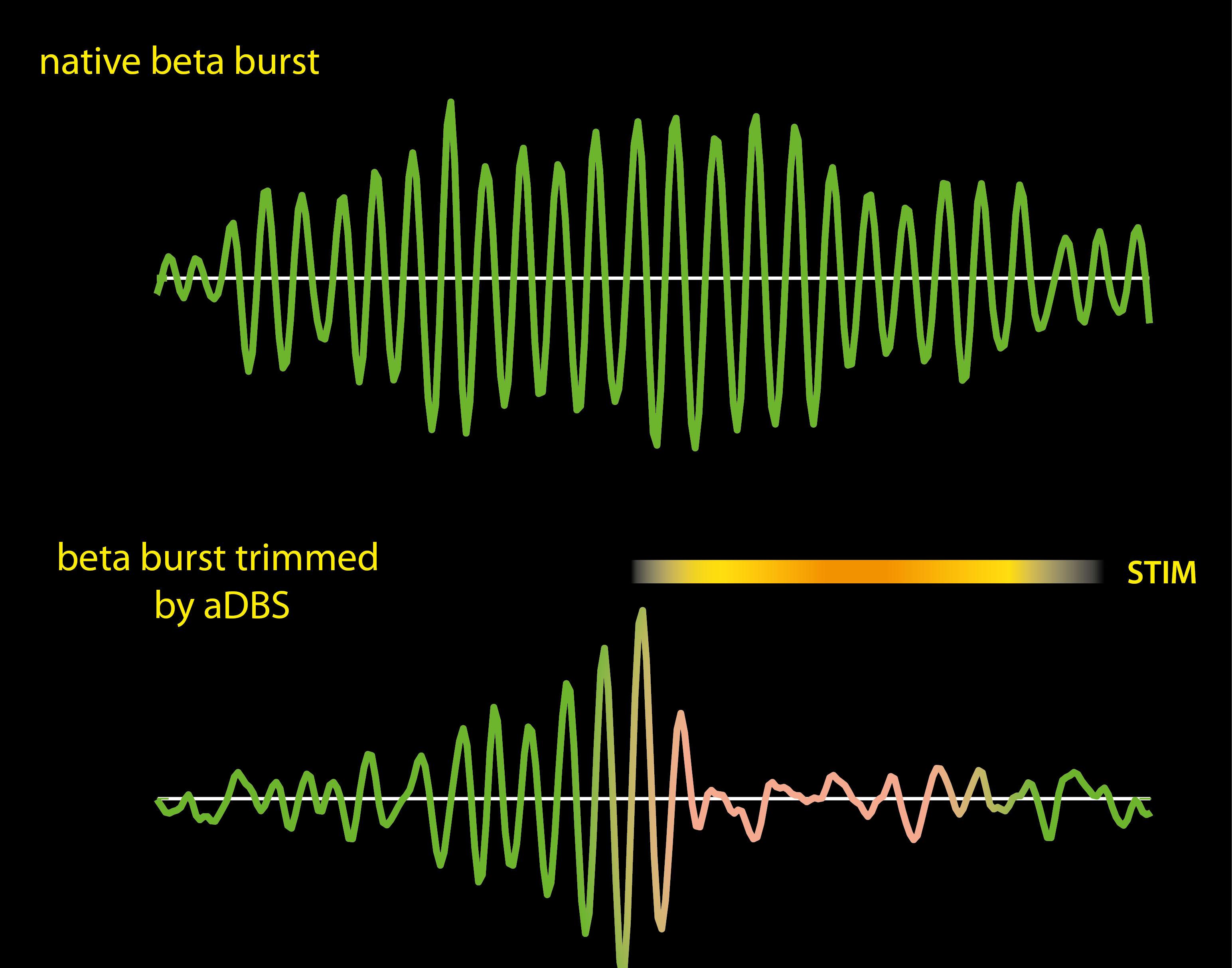
Local field potential signal recorded from a patient with a deep brain stimulation electrode, showing a burst of beta-frequency oscillatory activity (top) and adaptive deep brain stimulation being triggered and reducing the length of another beta burst (bottom).
Applications & Funding
The Unit is a division of the Nuffield Department of Clinical Neurosciences, and most of our PhD students undertake studies for a DPhil in Clinical Neurosciences. The DPhil in Clinical Neurosciences course webpage includes guidance on the PhD application process and entry requirements, information about potential costs, and advice for Home and Overseas students.
We strongly recommend that prospective PhD students contact potential supervisors at the Unit (e.g. a Group Leader) well in advance of submitting a formal application to the university. Contacting potential supervisors will help you find out more about the application process and the research projects that can be hosted at the Unit. We look forward to hearing from you.
We host PhD studentships funded by a variety of sources, including the MRC Centre of Research Excellence in Restorative Neural Dynamics, the MRC industrial Collaborative Awards in Science and Engineering (iCASE) studentships scheme, and departmental scholarships and other doctoral training programmes at the University of Oxford. Students with their own independent funding will also be considered.
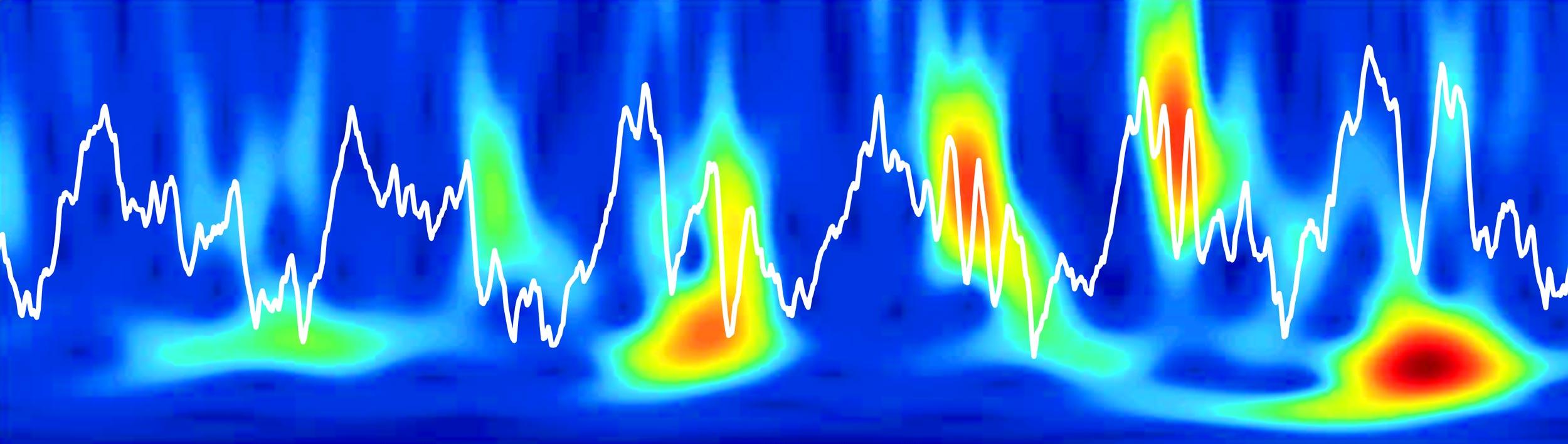
Hippocampal theta oscillations (white) with associated faster rhythms (rainbow colours). From: Lopes-Dos-Santos V. et eal. Parsing Hippocampal Theta Oscillations by Nested Spectral Components during Spatial Exploration and Memory-Guided Behavior. 2018. Neuron, 100(4):940–952.