Sharott Group
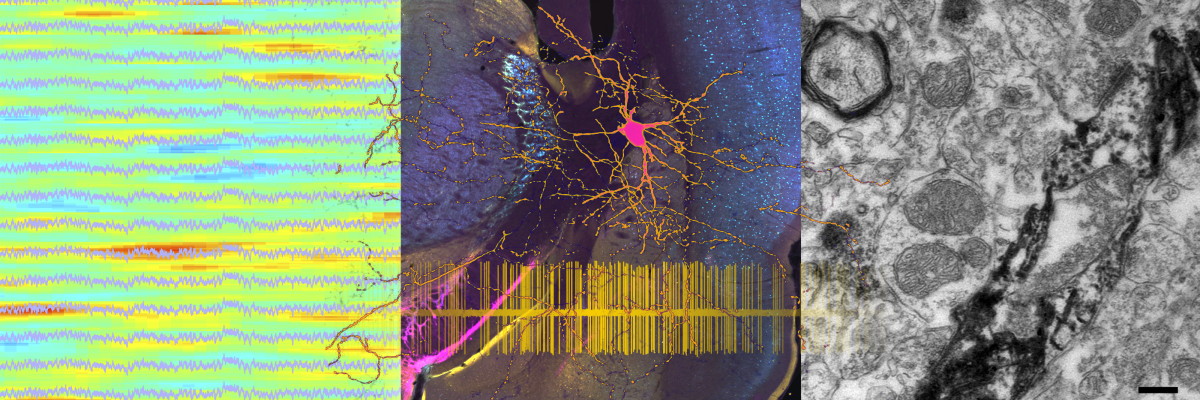
Our group is focussed on developing and delivering novel methods of therapeutic brain stimulation for brain disorders for which existing approaches remain ineffective. This development is underpinned by fundamental insights into functional and dysfunctional computation at the level of populations of neurons in affected brain areas. We use a cross-species strategy, where preclinical experiments are used develop methods of modulating brain activity in real-time using lightweight approaches that can be readily deployed on human devices.
Our overarching aim is to identify systems-level mechanisms underlying fundamental brain functions and to use this understanding to develop brain stimulation-based technologies to treat brain disorders. A key principle of our strategy is to use forward and back-translation between studies in experimental animals and human subjects with deep brain electrodes. In experimental animals, we investigate function and dysfunction at the level of spiking activity of many neurons in relevant brain areas (e.g. cortex, basal ganglia, thalamus, hippocampus) and use analytical techniques aimed at identifying computational processes at the population-scale. A key part of our work is to identify signals (e.g. features of local field potentials) that are recorded in humans that provide accurate information about these population-level dynamics. Increasingly, by utilising next-generation sense/stimulation devices, we can track such electrophysiological signatures of disease during weeks and months of treatment. By combining these different levels of information, we develop clinically tractable approaches that can promote functional activity and/or supress activities that lead to impaired cognition and behaviour. To achieve this, we focus on closed-loop approaches that can track these neural signatures in real-time and use this information to control the timing of deep brain or non-invasive stimulation in ways that restores function. Using this approach, we aim to identify novel, clinically tractable interventions that improve sleep, cognition and motor control in disorders including Parkinson’s disease, Alzheimer’s disease, stroke and schizophrenia.
- Identifying population-level neural activity supporting motor control and decision making.
- Cross-species development of novel brain stimulation approaches for brain disorders, including Parkinson’s disease and Alzheimer’s disease.
- Development of novel closed-loop approaches for large-scale modulation of neural oscillations associated with motor control, memory and sleep.
- High-density electrophysiological recordings during complex behaviour
- Closed-loop deep brain stimulation.
- Clinical neurophysiology in people with deep brain electrodes for therapy.
Equality and Diversity
We are committed to fostering an inclusive work environment that celebrates diversity and promotes equal opportunity within our group and the wider BNDU.
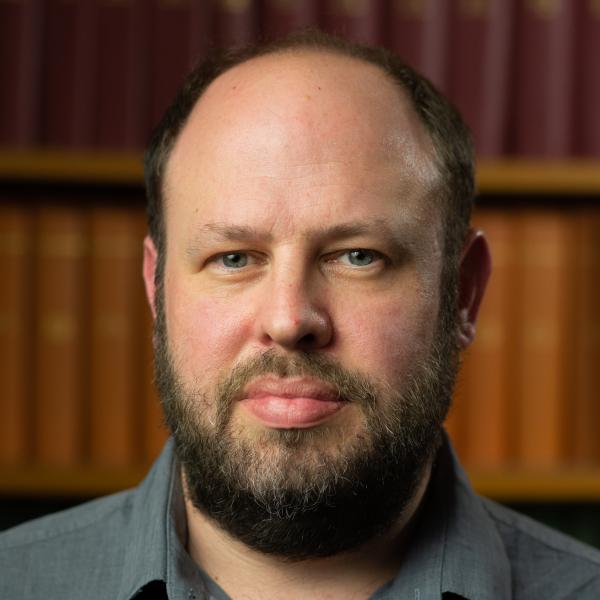
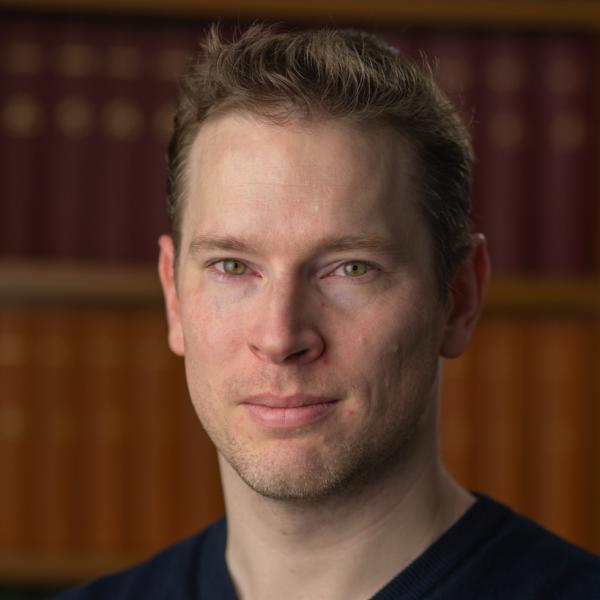
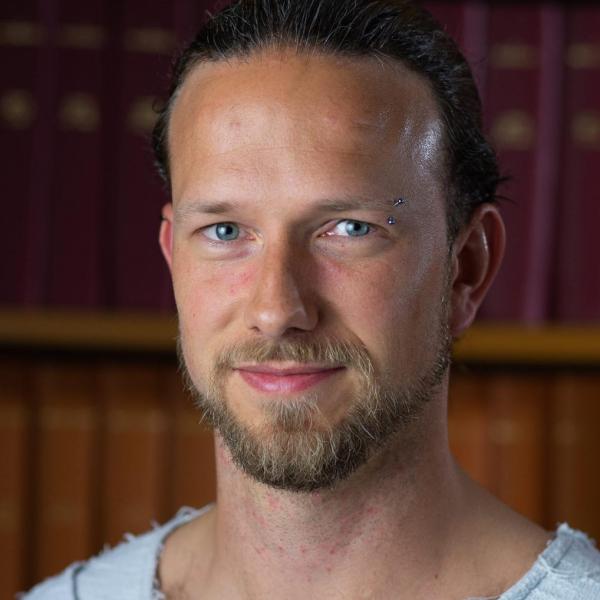
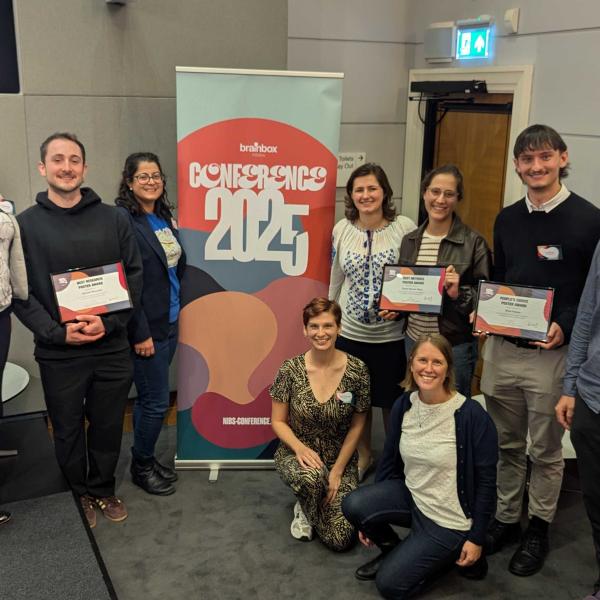
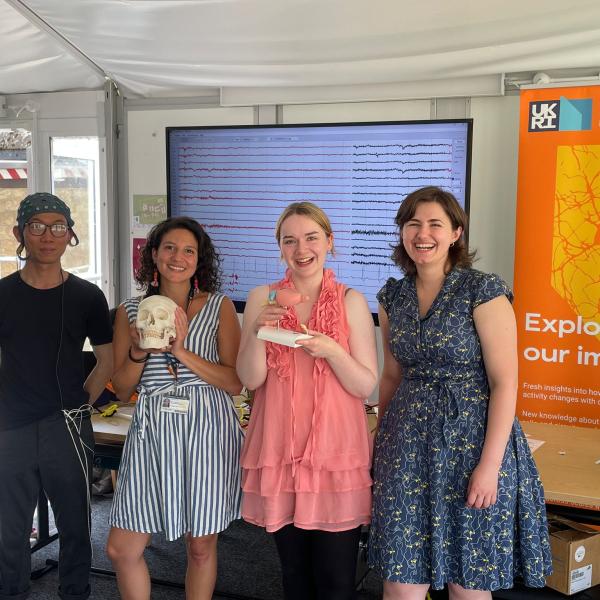
The enthusiastic BNDU team of scientists. (L-R) Shenghong, Chiara, Rosie and Ioana.
Studentships
Project
Phase-locked Deep Brain Stimulation to restore neural dynamics in Parkinson’s disease
In Parkinson’s disease (PD), abnormal brain rhythms—such as elevated beta waves and disrupted slow-wave sleep—contribute to movement and sleep problems. Phase-locked deep brain stimulation (DBS) can help correct these patterns by timing stimulation to specific phases of brain activity. Leveraging recent advances in real-time phase estimation and artefact removal, this project explores how phase-specific DBS may improve motor function and sleep in PD, moving toward personalised brain therapies.
This PhD project aims to explore how precisely timed, phase-locked deep brain stimulation (DBS) can improve movement and sleep symptoms in people with Parkinson’s (PwP) by modulating abnormal brain rhythms. It combines real-time brain signal processing with closed-loop stimulation to target beta activity during wakefulness and slow-wave activity during sleep. Students will work with PwP who have already received DBS, develop stimulation protocols using a computer-in-the-loop system, and help build software interfaces for implantable devices. Through collaboration with clinical and engineering teams, the project seeks to uncover how brain rhythms relate to behaviour and advance personalised neuromodulation therapies.
The project will take place in the Brain Network Dynamics Unit of the Nuffield Department of Clinical Neurosciences and in the Medical Research Council Centre of Research Excellence in Restorative Neural Dynamics (MRC CoRE RND). Students will benefit from the extensive interdisciplinary skills training and personalised career development opportunities available within the Unit and the MRC CoRE RND. Students will receive specialised training in their areas of project research (see below) as well as, for example, in the translation and commercialisation of research, best practice in Open Science, and how to effectively involve and engage patients and the public with research.
Students will receive advanced training in human neurophysiology, including recording and real-time processing of intracranial and scalp brain signals. They will gain hands-on experience with closed-loop brain stimulation systems and work directly with people with Parkinson’s, learning clinical research methods, behavioural testing, and sleep analysis. The project also builds skills in time-series analysis, machine learning, and software development for neurotechnology, including designing software interfaces for implantable devices. Collaboration across the MRC CoRE RND will support training in translational neuroscience and adaptive stimulation strategies.
This four-year Ph.D. (D.Phil.) studentship offers three years of full-time tuition fees at the Home rate, and four years of non-taxable stipend at the full-time UKRI rate (including any uplifts announced). Both Home students and International students are eligible to receive this funding package. Please see further details about MRC/UKRI studentships and UKRI guidance regarding Home and International eligibility. Successful offer-holders who have applied by the December deadline may also be considered for other University of Oxford scholarships.
Interested candidates should possess, or expect to receive, a 1st class or upper 2nd class degree (or equivalent) in a related scientific discipline, e.g. physical sciences, medicine, computer science, engineering, or mathematics. Previous experience in neuroscience research is highly desirable.
Candidates must contact the lead project supervisor before submitting an application. To find out more about this studentship, the research project, and the application process, please contact Prof Huiling Tan by email on huiling.tan@ndcn.ox.ac.uk.
To be considered for this studentship, please submit an application for admission to the D.Phil. in Clinical Neurosciences at the Nuffield Department of Clinical Neurosciences (course code RD_CU1), following the guidance for applications to this course. On the application form, in the section headed ‘Departmental Studentship Applications’, please indicate that you are applying for a studentship and enter the reference code “27NDCN01MRC” into the funding tab.
The closing date for applications is 12.00 midday UK time on Tuesday 1st December 2026.
Supervisors

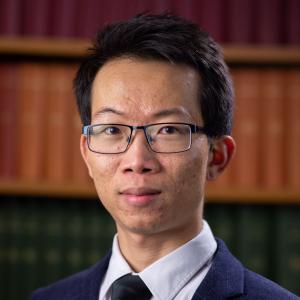
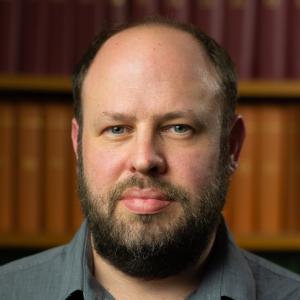
Applications are invited from both Home students and International students to join a multidisciplinary team of researchers studying phase-locked deep brain stimulation to improve movement and sleep in people with Parkinson’s disease. This studentship is available from the start of academic year 2027/28, is for 4 years, and will be co-supervised by Professor Huiling Tan, Dr Shenghong He, and Professor Andrew Sharott at the MRC Centre of Research Excellence in Restorative Neural Dynamics.
Project
Understanding neural circuit dynamics in models of Parkinson’s
The complex coordinated activity of large populations of neurons in the brain can be distilled down to low-dimensional ‘latent dynamics’. These latent dynamics provide insight into network-level computations in the brain that support motor and cognitive functions. Understanding how latent dynamics emerge in the brain in health and how they are affected in Parkinson’s is important for developing new and improved treatments for this condition.
The overall goal of this PhD studentship project is to generate new mechanistic insights into how latent dynamics in the basal ganglia and their partner brain circuits encode and shape purposeful movement in health as well as impaired movement in Parkinson’s. To achieve this, the project will couple experimental interventions with advanced data analyses to capture and interrogate neural circuit dynamics in the living brain at high spatiotemporal resolution. The project will focus on the use of mouse models with intact or comprised midbrain dopamine systems, the readouts from which straddle multiple levels of neural function.
The project will take place in the Brain Network Dynamics Unit of the Nuffield Department of Clinical Neurosciences and in the Medical Research Council Centre of Research Excellence in Restorative Neural Dynamics (MRC CoRE RND). Students will benefit from the extensive interdisciplinary skills training and personalised career development opportunities available within the Unit and the MRC CoRE RND. Students will receive specialised training in their areas of project research (see below) as well as, for example, in the translation and commercialisation of research, best practice in Open Science, and how to effectively involve and engage patients and the public with research.
Focusing on basal ganglia circuits, studentship holders will use cutting-edge research approaches for monitoring and manipulating neurons in the living brain. As an integral part of this project, you will receive advanced training in the following research techniques; electrophysiology, fibre photometry, neuroanatomy, and mouse behavioural assays, together with advanced data analysis. You will also be trained to use and characterise mouse models that have phenotypes of relevance to human Parkinson’s.
This four-year Ph.D. (D.Phil.) studentship offers three years of full-time tuition fees at the Home rate, and four years of non-taxable stipend at the full-time UKRI rate (including any uplifts announced). Both Home students and International students are eligible to receive this funding package. Please see further details about MRC/UKRI studentships and UKRI guidance regarding Home and International eligibility. Successful offer-holders who have applied by the December deadline may also be considered for other University of Oxford scholarships.
Interested candidates should hold, or expect to receive, a 1st class or upper 2nd class degree (or equivalent) in a related scientific discipline, e.g. biological or physical sciences, medicine, mathematics. Previous experience in neuroscience research is highly desirable.
Candidates must contact the lead project supervisor before submitting an application. To find out more about this studentship, the research project, and the application process, please contact Professor Peter Magill by email on peter.magill@ndcn.ox.ac.uk.
To be considered for this studentship, please submit an application for admission to the D.Phil. in Clinical Neurosciences at the Nuffield Department of Clinical Neurosciences (course code RD_CU1), following the guidance for applications to this course. On the application form, in the section headed ‘Departmental Studentship Applications’, please indicate that you are applying for a studentship and enter the reference code “27NDCN01MRC” into the funding tab.
The closing date for applications is 12.00 midday UK time on Tuesday 1st December 2026.
Supervisors
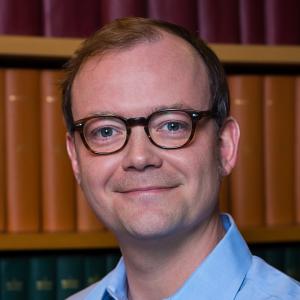
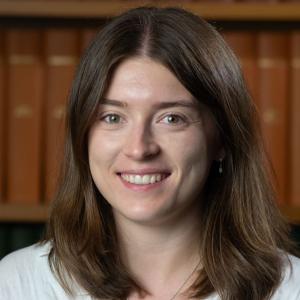
Applications are invited from both Home students and International students to join a multidisciplinary team of researchers studying the links between behaviour and brain circuit dynamics in animal models of Parkinson’s. This studentship is available from the start of academic year 2027/28, is for 4 years, and will be co-supervised by Professor Peter Magill, Professor Andrew Sharott, Dr Juan Gallego and Dr Helen Collins at the Medical Research Council Centre of Research Excellence in Restorative Neural Dynamics.
Project
Developing closed-loop sleep stimulation for motor learning and stroke recovery
There is growing evidence that sleep and sleep-related oscillations are disturbed following stroke, and poor sleep is associated with worse motor rehabilitation outcomes. Closed loop auditory stimulation (CLAS) is a promising technique to boost sleep-related oscillations and the associated functions (e.g. boosting motor memory through modulation of slow oscillations and sleep spindles). However, to maximise its benefits, this neurotechnology must work in the home, where most stroke rehabilitation takes place.
The overall goal of this PhD studentship is to develop and test a novel, home-based system for precise closed-loop auditory stimulation during sleep, and assess the feasibility of use for stroke survivors.
To achieve this, we will test the capability of our novel device to automatically track sleep in real time and test the effects on sleep-related oscillations and motor learning in stroke survivors. Alongside this, we will work together with stroke survivors, and other relevant stakeholders, to refine the design of the home-based system before testing the potential to deliver multi-night stimulation in a home setting.
The project will take place in the Brain Network Dynamics Unit and Oxford Centre for Integrative Neuroscience (within the Nuffield Department of Clinical Neurosciences) and in the Medical Research Council Centre of Research Excellence in Restorative Neural Dynamics (MRC CoRE RND). Students will benefit from the extensive interdisciplinary skills training and personalised career development opportunities available within the Unit and the MRC CoRE RND. Students will receive specialised training in their areas of project research (see below) as well as, for example, in the translation and commercialisation of research, best practice in Open Science, and how to effectively involve and engage patients and the public with research.
Studentship holders will harness cutting-edge methods for real-time monitoring of sleep EEG and closed-loop stimulation in a clinical population (stroke). As an integral part of these projects, you will receive advanced training in a variety of research techniques including polysomnography, behavioural/motor learning data collection, sleep scoring, advanced analysis of sleep microarchitecture, and co-design.
This four-year Ph.D. (D.Phil.) studentship offers three years of full-time tuition fees at the Home rate, and four years of non-taxable stipend at the full-time UKRI rate (including any uplifts announced). Both Home students and International students are eligible to receive this funding package. Please see further details about MRC/UKRI studentships and UKRI guidance regarding Home and International eligibility. Successful offer-holders who have applied by the December deadline may also be considered for other University of Oxford scholarships.
Interested candidates should possess, or expect to receive, a 1st class or upper 2nd class degree (or equivalent) in a related scientific discipline, e.g. biomedical sciences, neuroscience, psychology, medicine, bioengineering. Previous experience in human neuroscience research with clinical populations is highly desirable.
Candidates must contact the lead project supervisor before submitting an application. To find out more about this studentship, the research project, and the application process, please contact Associate Professor Melanie Fleming by email on melanie.fleming@ndcn.ox.ac.uk.
To be considered for this studentship, please submit an application for admission to the D.Phil. in Clinical Neurosciences at the Nuffield Department of Clinical Neurosciences (course code RD_CU1), following the guidance for applications to this course. On the application form, in the section headed ‘Departmental Studentship Applications’, please indicate that you are applying for a studentship and enter the reference code “27NDCN01MRC” into the funding tab.
The closing date for applications is 12.00 midday UK time on Tuesday 1st December 2026.
Supervisors
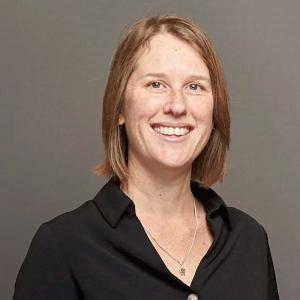
Applications are invited from both Home students and International students to join a multidisciplinary team of researchers studying the potential for closed-loop auditory stimulation during sleep to be used to improve memory consolidation following stroke. This studentship is available from the start of academic year 2027/28, is for 4 years, and will be co-supervised by Dr Melanie Fleming, Professor Andrew Sharott, and Professor Andrew Jackson at the MRC Centre of Research Excellence in Restorative Neural Dynamics.
Like other Groups at the BNDU, we are committed to best practice in open research. We have created and curated a range of primary data, metadata and related resources that can be readily downloaded by external users from the BNDU's data sharing platform, Cambium.