Phase-locked Deep Brain Stimulation to restore neural dynamics in Parkinson’s Disease
Project
Phase-locked Deep Brain Stimulation to restore neural dynamics in Parkinson’s Disease
In Parkinson’s disease (PD), abnormal brain rhythms—such as elevated beta waves and disrupted slow-wave sleep—contribute to movement and sleep problems. Phase-locked deep brain stimulation (DBS) can help correct these patterns by timing stimulation to specific phases of brain activity. Leveraging recent advances in real-time phase estimation and artefact removal, this project explores how phase-specific DBS may improve motor function and sleep in PD, moving toward personalised brain therapies.
This PhD project aims to explore how precisely timed, phase-locked deep brain stimulation (DBS) can improve movement and sleep symptoms in people with Parkinson’s (PwP) by modulating abnormal brain rhythms. It combines real-time brain signal processing with closed-loop stimulation to target beta activity during wakefulness and slow-wave activity during sleep. Students will work with PwP who have already received DBS, develop stimulation protocols using a computer-in-the-loop system, and help build software interfaces for implantable devices. Through collaboration with clinical and engineering teams, the project seeks to uncover how brain rhythms relate to behaviour and advance personalised neuromodulation therapies.
The project will take place in the Brain Network Dynamics Unit of the Nuffield Department of Clinical Neurosciences and in the Medical Research Council Centre of Research Excellence in Restorative Neural Dynamics (MRC CoRE RND). Students will benefit from the extensive interdisciplinary skills training and personalised career development opportunities available within the Unit and the MRC CoRE RND. Students will receive specialised training in their areas of project research (see below) as well as, for example, in the translation and commercialisation of research, best practice in Open Science, and how to effectively involve and engage patients and the public with research.
Students will receive advanced training in human neurophysiology, including recording and real-time processing of intracranial and scalp brain signals. They will gain hands-on experience with closed-loop brain stimulation systems and work directly with people with Parkinson’s, learning clinical research methods, behavioural testing, and sleep analysis. The project also builds skills in time-series analysis, machine learning, and software development for neurotechnology, including designing software interfaces for implantable devices. Collaboration across the MRC CoRE RND will support training in translational neuroscience and adaptive stimulation strategies.
This four-year Ph.D. (D.Phil.) studentship offers three years of full-time tuition fees at the Home rate, and four years of non-taxable stipend at the full-time UKRI rate (including any uplifts announced). Both Home students and International students are eligible to receive this funding package. Please see further details about MRC/UKRI studentships and UKRI guidance regarding Home and International eligibility. Successful offer-holders who have applied by the December deadline may also be considered for other University of Oxford scholarships.
Interested candidates should possess, or expect to receive, a 1st class or upper 2nd class degree (or equivalent) in a related scientific discipline, e.g. physical sciences, medicine, computer science, engineering, or mathematics. Previous experience in neuroscience research is highly desirable.
Candidates must contact the lead project supervisor before submitting an application. To find out more about this studentship, the research project, and the application process, please contact Prof Huiling Tan by email on huiling.tan@ndcn.ox.ac.uk.
To be considered for this studentship, please submit an application for admission to the D.Phil. in Clinical Neurosciences at the Nuffield Department of Clinical Neurosciences (course code RD_CU1), following the guidance for applications to this course. On the application form, in the section headed ‘Departmental Studentship Applications’, please indicate that you are applying for a studentship and enter the reference code “27NDCN01MRC” into the funding tab.
The closing date for applications is 12.00 midday UK time on Tuesday 1st December 2026.
Supervisors

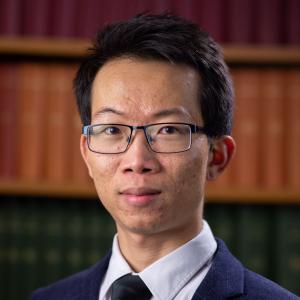
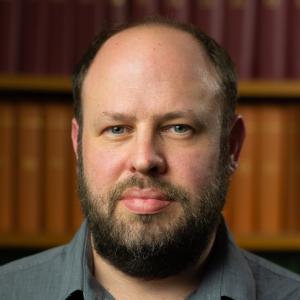
Applications are invited from both Home students and International students to join a multidisciplinary team of researchers studying phase-locked deep brain stimulation to improve movement and sleep in people with Parkinson’s disease. This studentship is available from the start of academic year 2027/28, is for 4 years, and will be co-supervised by Professor Huiling Tan, Dr Shenghong He, and Professor Andrew Sharott at the MRC Centre of Research Excellence in Restorative Neural Dynamics.