Developing closed-loop sleep stimulation for motor learning and stroke recovery
Project
Developing closed-loop sleep stimulation for motor learning and stroke recovery
There is growing evidence that sleep and sleep-related oscillations are disturbed following stroke, and poor sleep is associated with worse motor rehabilitation outcomes. Closed loop auditory stimulation (CLAS) is a promising technique to boost sleep-related oscillations and the associated functions (e.g. boosting motor memory through modulation of slow oscillations and sleep spindles). However, to maximise its benefits, this neurotechnology must work in the home, where most stroke rehabilitation takes place.
The overall goal of this PhD studentship is to develop and test a novel, home-based system for precise closed-loop auditory stimulation during sleep, and assess the feasibility of use for stroke survivors.
To achieve this, we will test the capability of our novel device to automatically track sleep in real time and test the effects on sleep-related oscillations and motor learning in stroke survivors. Alongside this, we will work together with stroke survivors, and other relevant stakeholders, to refine the design of the home-based system before testing the potential to deliver multi-night stimulation in a home setting.
The project will take place in the Brain Network Dynamics Unit and Oxford Centre for Integrative Neuroscience (within the Nuffield Department of Clinical Neurosciences) and in the Medical Research Council Centre of Research Excellence in Restorative Neural Dynamics (MRC CoRE RND). Students will benefit from the extensive interdisciplinary skills training and personalised career development opportunities available within the Unit and the MRC CoRE RND. Students will receive specialised training in their areas of project research (see below) as well as, for example, in the translation and commercialisation of research, best practice in Open Science, and how to effectively involve and engage patients and the public with research.
Studentship holders will harness cutting-edge methods for real-time monitoring of sleep EEG and closed-loop stimulation in a clinical population (stroke). As an integral part of these projects, you will receive advanced training in a variety of research techniques including polysomnography, behavioural/motor learning data collection, sleep scoring, advanced analysis of sleep microarchitecture, and co-design.
This four-year Ph.D. (D.Phil.) studentship offers three years of full-time tuition fees at the Home rate, and four years of non-taxable stipend at the full-time UKRI rate (including any uplifts announced). Both Home students and International students are eligible to receive this funding package. Please see further details about MRC/UKRI studentships and UKRI guidance regarding Home and International eligibility. Successful offer-holders who have applied by the December deadline may also be considered for other University of Oxford scholarships.
Interested candidates should possess, or expect to receive, a 1st class or upper 2nd class degree (or equivalent) in a related scientific discipline, e.g. biomedical sciences, neuroscience, psychology, medicine, bioengineering. Previous experience in human neuroscience research with clinical populations is highly desirable.
Candidates must contact the lead project supervisor before submitting an application. To find out more about this studentship, the research project, and the application process, please contact Associate Professor Melanie Fleming by email on melanie.fleming@ndcn.ox.ac.uk.
To be considered for this studentship, please submit an application for admission to the D.Phil. in Clinical Neurosciences at the Nuffield Department of Clinical Neurosciences (course code RD_CU1), following the guidance for applications to this course. On the application form, in the section headed ‘Departmental Studentship Applications’, please indicate that you are applying for a studentship and enter the reference code “27NDCN01MRC” into the funding tab.
The closing date for applications is 12.00 midday UK time on Tuesday 1st December 2026.
Supervisors
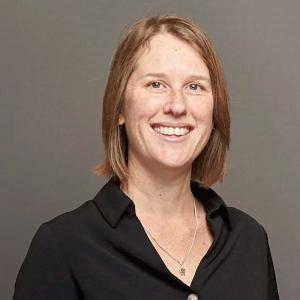
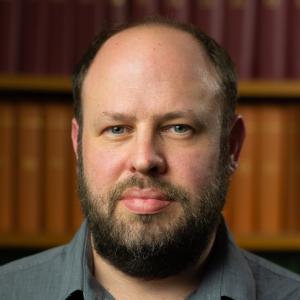
Applications are invited from both Home students and International students to join a multidisciplinary team of researchers studying the potential for closed-loop auditory stimulation during sleep to be used to improve memory consolidation following stroke. This studentship is available from the start of academic year 2027/28, is for 4 years, and will be co-supervised by Dr Melanie Fleming, Professor Andrew Sharott, and Professor Andrew Jackson at the MRC Centre of Research Excellence in Restorative Neural Dynamics.