
Integrating new memories into the hippocampal network activity space.

McHugh SB
Lefèvre L
Trouche S
El-Gaby M
Schultz SR

When the brain forms new memories, what happens to the other, older memories? Here, we report that in a part of the brain called the hippocampus, the flexible reorganisation of nerve cell activity representing existing memories allows for embedding of new memories.

Scientific Abstract

By investigating the topology of neuronal co-activity, we found that mnemonic information spans multiple operational axes in the mouse hippocampus network. High-activity principal cells form the core of each memory along a first axis, segregating spatial contexts and novelty. Low-activity cells join co-activity motifs across behavioral events and enable their crosstalk along two other axes. This reveals an organizational principle for continuous integration and interaction of hippocampal memories.
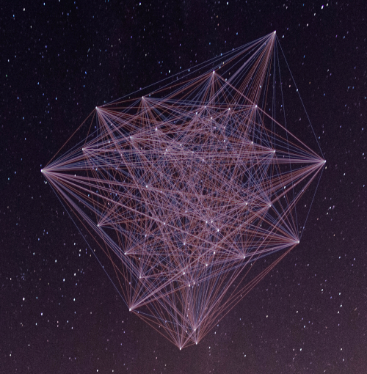
Picture of stars in the night sky, with lines drawn between the stars. The stars and lines represent nerve cells and their connections that support the reorganisation of brain activity to support the continuous integration and interaction of memories.
A set of connected stars in the night sky to illustrate Gava and colleagues’ use of a graph-theoretical approach to study how the topological reorganization of neuronal cofiring supports continuous integration and interaction of memories in the hippocampal "network activity space".
Citation

2021. Nat Neurosci, 24(3):326-330.

DOI
10.1038/s41593-021-00804-w
Similar Content
Paper
Author
McHugh SB
Castelli M
Thompson SE
Tam SKE
Hartwich K

2024. Neuron, 112(22):3768-3781.e8.

Paper
Author
van de Ven GM
Trouche S
McNamara CG
Allen K
2016.Neuron, 92(5):968-974.
Paper
Author
Lefèvre L
McHugh SB
Brizee D
Hartwich K
Sjoberg H

2024. Science, 385(6713):1120-1127.

Paper
Author
Koolschijn RS
Emir UE
Pantelides AC
Nili H
Behrens TE
2019. Neuron 101:528-541